The Des White – Elena Bertoni Mystery Series
First in the series — Dean Man on Campus
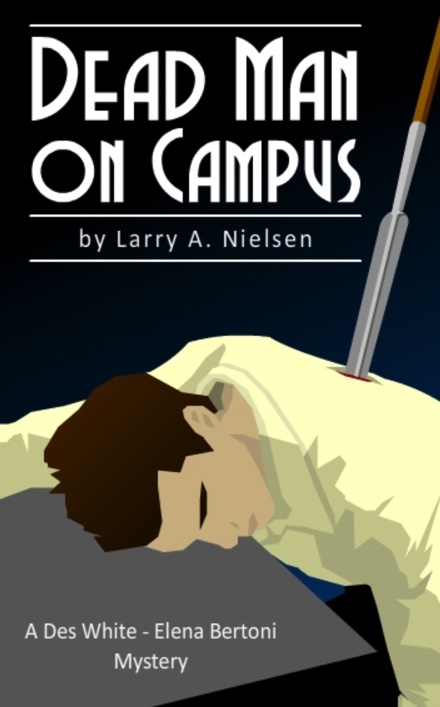
When famous wildlife professor Drew Robbins is found dead on his desk with a Maasai spear lodged in his back, the list of possible murderers reaches every corner of the university. Was it his long-time research associate, jealous about the fame he hasn’t shared? The television producer Robbins had fired from his upcoing nature show? His secret lover from the budget office, the horticulture student who tends his garden, or his fiancee? The origins of the tale go back decades to the wilds of Tanzania where an old man drinks himself slowly to death in The Hyena Bar. Professor Elena Bertoni is tasked with taking over th dean man’s duties, only to discoverf that all is not right. Teamed up with university police chief Desdemona White, the two dig deep to find out the truth. Truth that only murder could reveal.
Second in the series — The Center Piece
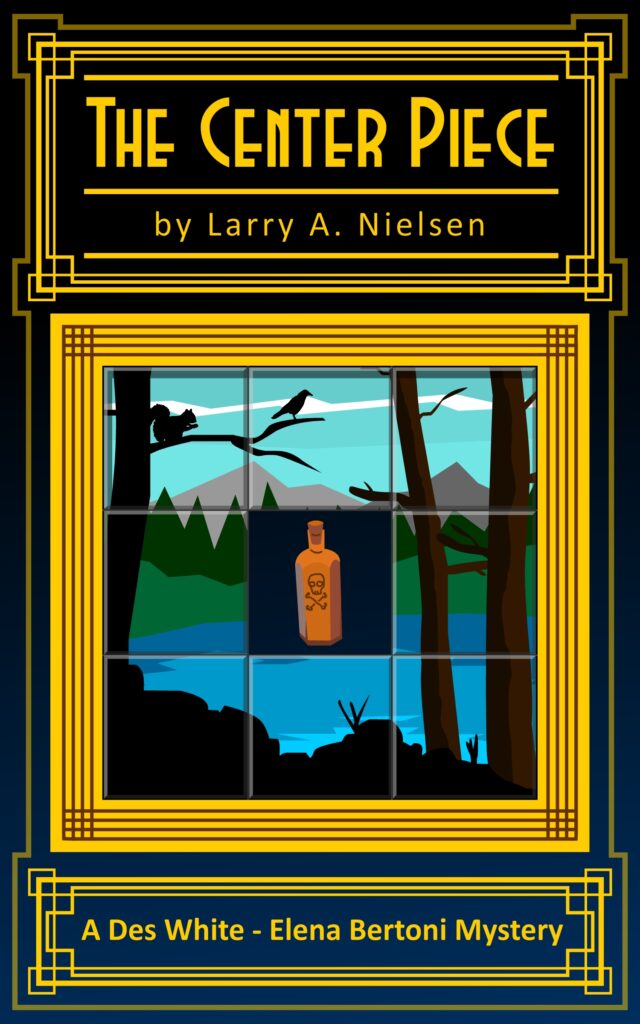
Famous ornithological artist Louis Agassiz Fuertes was largely unknown when he was commissioned to paint a large mural for the 1892 Columbian Exposition. After the exposition, the nine panels that made up the mural were lost for a century. Now they were being reassembled for a major exhibit in New York. The final panel, the Center Piece, that hung in the biological sciences library at Virginia Western University, was scheduled to be reunited with the others. That is, until it vanished again, stolen in a brazen heist that leaves university police chief Desdemona White with neither clues nor suspects. Enter New York art expert Remy Tremblay, who sets her on the right trail and upends her personal life. White’s colleague and friend, Professor Elena Bertoni, once again risks her life to secure essential evidence. Evidence not just of theft but also of massive fraud, greed, revenge–and murder.
Third in the series — Not So Innocent Abroad

Dr. Elena Bertoni was fulfilling one of her professional dreams–teaching Western Virginia University students on study abroad in London. It was a lovely setting, with eager students engaged in one of the world’s great cities. But when her colleague, music professor Sean Metcalf, was found dead in his bed, the adventure turned dark. Metcalf, it seemed, was much more than just a professor. He played guitar and sang at a local pub, making friends–and perhaps enemies–of a museum worker, foreign diplomats, music historians, a violin maker and the students who shared his bed. When the university’s police chief, Des White, arrived to join the British detectives working on the case, Elena and Des found themselves once again teamed up to solve a perplexing mystery, this time involving endangered species, ancient music, and more–including murder.
About North Carolina State Ulniversity

Here’s something special for the entire Wolfpack family! Larry Nielsen, professor emeritus at NC State, offers 32 entertaining stories about all aspects of life at the university, everything from the marching band to the Free Expression Tunnel and the joy of having a twelve-foot python in class. Nielsen, who was a college dean and the university’s provost as well as a distinguished undergraduate teaching professor, provides his unique insights–and humorous style–to tell about the people, place and events that have shaped NC State over the decades.

Larry Nielsen offers a highly personal account of his tenure as Provost of North Carolina State University, from his unexpected invitation by the Chancellor to act as interim Provost, to the events that forced his resignation four years later, and brought him unwanted notoriety. In a fast-paced, self-deprecating style he invites the reader to share the activities that crowded his schedule, the symbolic character of the role, its opportunities to shape policy, and its limitations, as well as the joy and satisfaction he derived from making a difference in people’s lives and the institution. We see him in action, and get a sense of the role, as he addresses problems large and small. He shares insights on the governance of a large public institution, on how monies are allocated, and funds made available for strategic initiatives. By the end of the book, we gain an understanding of the myriad roles of the “number two” position of the institution, responsible for the direction and functioning of all its academic and curricular affairs, that Larry Nielsen characterized for himself as “the University’s stay-at-home Dad.”
Conservation Books
Nature’s Allies: Eight Conservationists Who Changed Our World
It’s easy to feel powerless in the face of big environmental challenges—but we need inspiration more than ever. With political leaders who deny climate change, species that are fighting for their very survival, and the planet’s last places of wilderness growing smaller and smaller, what can a single person do? In Nature’s Allies, Larry Nielsen uses the stories of conservation pioneers to show that through passion and perseverance, we can each be a positive force for change.
In eight engaging and diverse biographies—John Muir, Ding Darling, Aldo Leopold, Rachel Carson, Chico Mendes, Billy Frank Jr., Wangari Maathai, and Gro Harlem Brundtland—we meet individuals who have little in common except that they all made a lasting mark on our world. Some famous and some little known to readers, they spoke out to protect wilderness, wildlife, fisheries, rainforests, and wetlands. They fought for social justice and exposed polluting practices. They marched, wrote books, testified before Congress, performed acts of civil disobedience, and, in one case, were martyred for their defense of nature. Nature’s Allies pays tribute to them all as it rallies a new generation of conservationists to follow in their footsteps.
These vivid biographies are essential reading for anyone who wants to fight for the environment against today’s political opposition. Nature’s Allies will inspire students, conservationists, and nature lovers to speak up for nature and show the power of one person to make a difference.
Ecosystem Management: Adaptive, Community-Based Conservation
Today’s natural resource managers must be able to navigate among the complicated interactions and conflicting interests of diverse stakeholders and decisionmakers. Technical and scientific knowledge, though necessary, are not sufficient. Science is merely one component in a multifaceted world of decision making. And while the demands of resource management have changed greatly, natural resource education and textbooks have not. Until now.
Ecosystem Management represents a different kind of textbook for a different kind of course. It offers a new and exciting approach that engages students in active problem solving by using detailed landscape scenarios that reflect the complex issues and conflicting interests that face today’s resource managers and scientists. Focusing on the application of the sciences of ecology and conservation biology to real-world concerns, it emphasizes the intricate ecological, socioeconomic, and institutional matrix in which natural resource management functions, and illustrates how to be more effective in that challenging arena.
Each chapter is rich with exercises to help facilitate problem-based learning. The main text is supplemented by boxes and figures that provide examples, perspectives, definitions, summaries, and learning tools, along with a variety of essays written by practitioners with on-the-ground experience in applying the principles of ecosystem management.
Accompanying the textbook is an instructor’s manual that provides a detailed overview of the book and specific guidance on designing a course around it.
Ecosystem Management grew out of a training course developed and presented by the authors for the U.S. Fish and Wildlife Service at its National Training Center in Shepherdstown, West Virginia. In 20 offerings to more than 600 natural resource professionals, the authors learned a great deal about what is needed to function successfully as a professional resource manager. The book offers important insights and a unique perspective dervied from that invaluable experience.